
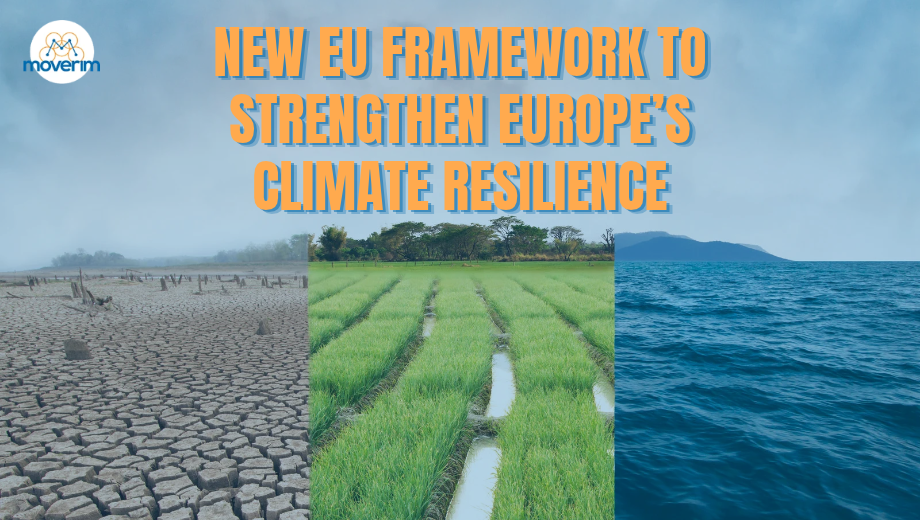
The European Commission has presented a new EU Framework for Climate Resilience to strengthen Europe’s ability to anticipate climate risks, prepare for extreme weather events and manage their consequences. The initiative aims to integrate climate resilience into key policy areas, helping public authorities, businesses and communities better prepare for the growing impacts of climate change.
This summer’s extreme weather events have once again shown how climate change directly affects people’s daily lives, from prolonged heatwaves to droughts and other severe weather conditions. These events also carry a significant economic cost: climate-related damage is estimated to have caused around €200 billion in losses between 2022 and 2025. Climate resilience is therefore not just an environmental challenge, but a strategic priority for protecting citizens, strengthening Europe’s economy and safeguarding its long-term prosperity.
A coordinated approach to climate risk management
The new framework proposes a more systematic approach to climate resilience, moving beyond responding to disasters towards anticipating risks, improving preparedness and reducing potential losses.
At its core is a proposed European Climate Resilience Law, which would establish a common framework for assessing and managing climate risks at EU and national levels. The proposal includes a shared reference pathway for global warming to help Member States assess future climate risks and inform their decisions.
The Commission also aims to simplify national planning requirements by introducing a single national strategic plan. Local and regional authorities will receive support for adaptation through pilot projects and advisory services.
Practical tools and new initiatives
The framework will provide public authorities, businesses and communities with practical tools to better understand and manage climate risks. The European online platform for climate resilience will include a new European Climate Viewer, designed to help users identify and anticipate climate hazards across Europe.
The Commission is also announcing a series of complementary initiatives to strengthen Europe’s preparedness for extreme weather events. These include a European Heatwave Plan, a European Water initiative and the creation of a Climate Insurance Alliance.
In addition, the Commission intends to propose a strategic EU climate resilience plan in 2028, with the aim of ensuring timely and coordinated action at European level.
Turning climate resilience into an economic opportunity
Investing in climate adaptation can also deliver significant economic benefits. According to the Commission, the returns on adaptation investments could exceed ten times their initial cost when accounting for the losses and damage avoided.
At the same time, the global market for climate adaptation solutions is expected to quadruple to €3.5 trillion by 2050, creating opportunities for European businesses to develop innovative technologies and strengthen their position in this growing market.
Building a more resilient Europe
For organisations working on sustainability, innovation, infrastructure and climate adaptation, these developments underline the growing importance of climate resilience in European policy and investment priorities. Research and innovation will be key to turning these priorities into practical solutions. Through Horizon 2020 and Horizon Europe, the EU has supported more than 225 climate adaptation projects, while the EU Mission on Adaptation to Climate Change is helping nearly 300 regions and local authorities translate research into action. From early-warning systems to nature-based solutions, these initiatives aim to strengthen Europe’s preparedness while creating new opportunities for innovation and business growth.
Find out more: European Commission – EU Framework for Climate Resilience | EU research and innovation supporting climate resilience